
July 2, 2026
Why Early Intervention Matters: The Long-Term Benefits of Addressing Developmental Concerns Early
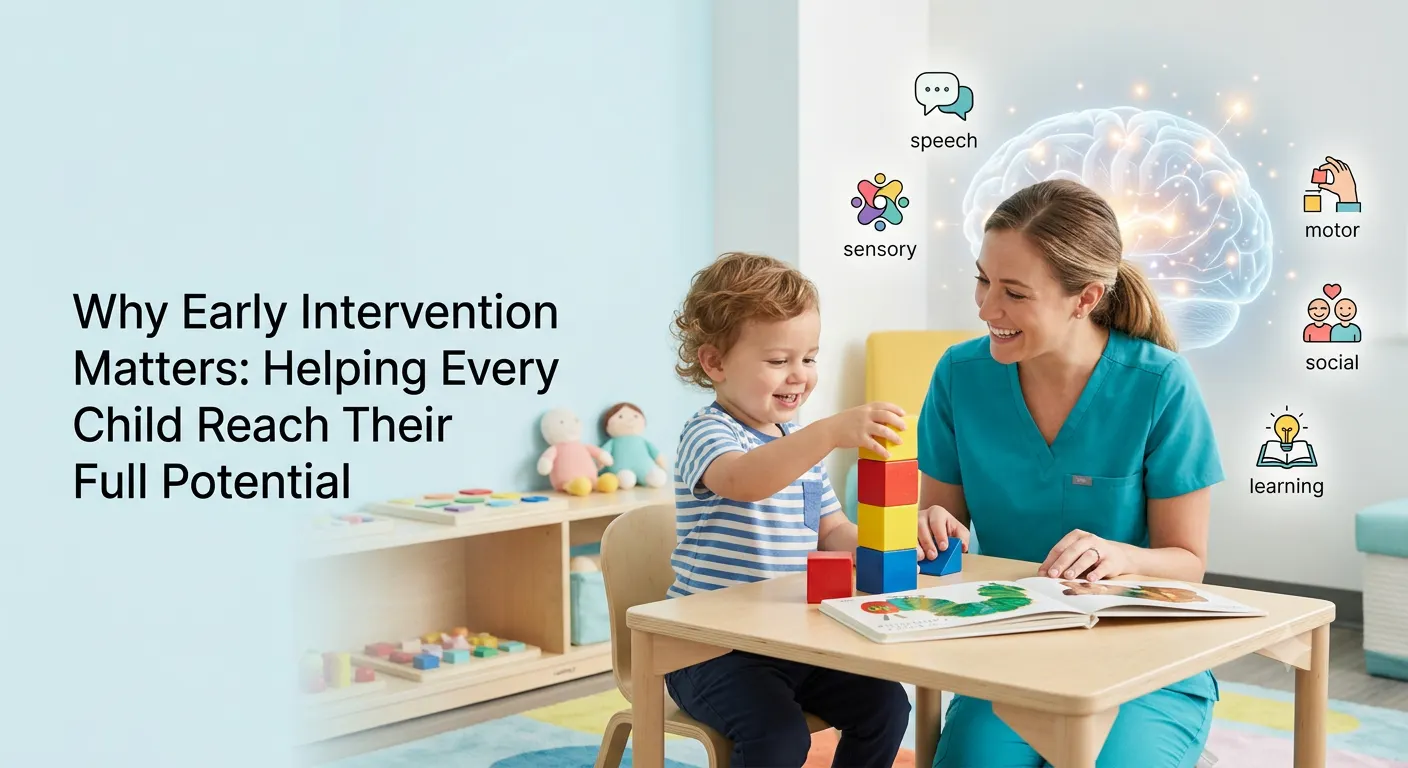
Every child develops at their own pace, but development follows a predictable sequence of milestones that provide important clues about how a child is growing and learning. When delays or differences emerge, many families find themselves faced with uncertainty and difficult questions. Some parents are told to “wait and see,” while others wonder whether their concerns are valid. In reality, early identification and intervention are among the most powerful tools available for improving outcomes for children with developmental, sensory, behavioral, and learning differences.
Early intervention is not about labeling children or assuming the worst. Rather, it is about recognizing that the earliest years of life represent a period of remarkable growth and opportunity. During these years, the brain is especially responsive to learning and adaptation. Providing support during this critical window can help children develop essential skills, strengthen family relationships, and reduce the impact of developmental challenges over time.
At Twinkle Little Star Foundation, we believe that every child deserves the opportunity to thrive and that families should have access to the information, resources, and support needed to help their children reach their fullest potential.
What Is Early Intervention?
Early intervention refers to services and supports designed to address developmental concerns as early as possible. These services are intended to help infants, toddlers, and young children who are experiencing delays or who are at risk for developmental challenges. The goal of early intervention is not simply to treat symptoms but to promote healthy development and strengthen the child’s ability to participate successfully in everyday life.
Developmental concerns can affect many areas, including communication, social interaction, motor skills, sensory processing, cognition, behavior, emotional regulation, and self-care abilities. Early intervention programs may include speech therapy, occupational therapy, physical therapy, behavioral support, developmental therapy, parent education, and family guidance.
Importantly, early intervention does not require a child to have a formal diagnosis. Children who demonstrate delays or differences in development may benefit from support even before a definitive diagnosis is established. Early action allows families to address concerns proactively rather than waiting for challenges to become more significant.
Understanding Neuroplasticity and Brain Development
One of the primary reasons early intervention is so effective lies in a remarkable characteristic of the human brain known as neuroplasticity. Neuroplasticity refers to the brain’s ability to form new neural connections and reorganize itself in response to experiences and learning.
During the first few years of life, the brain develops at an extraordinary rate. According to the National Institutes of Health, more than one million new neural connections are formed every second during early childhood. This period represents a unique window during which experiences have a profound influence on cognitive, emotional, social, and physical development.
Because the young brain is highly adaptable, therapeutic interventions provided during early childhood can strengthen neural pathways and support the development of skills that may otherwise become increasingly difficult to acquire later in life. Early intervention takes advantage of this period of heightened plasticity, making it possible to maximize developmental potential and improve long-term outcomes.
Research consistently demonstrates that children who receive timely support often experience improvements in communication, motor abilities, social skills, academic readiness, and independence. Early intervention can also reduce the need for more intensive services in later childhood and adolescence.
Research and Statistics Supporting Early Intervention
Decades of research have established early intervention as one of the most effective investments in child development. According to the Centers for Disease Control and Prevention (CDC), approximately one in six children in the United States has a developmental disability or delay. Despite this prevalence, many children are not identified until they enter school, resulting in missed opportunities for earlier support.
Studies have shown that early intervention services can significantly improve developmental outcomes. Research from the National Early Childhood Technical Assistance Center indicates that children who receive early intervention are more likely to develop age-appropriate skills, require fewer special education services, and demonstrate improved academic performance later in life.
The National Institute of Child Health and Human Development has also highlighted the importance of early intervention in promoting language development, cognitive functioning, and social-emotional well-being. These benefits extend beyond childhood and can influence educational attainment, employment opportunities, and overall quality of life.
The economic impact of early intervention is equally compelling. Nobel Prize-winning economist James Heckman demonstrated that investments made during early childhood yield some of the highest returns in human development. By addressing developmental concerns early, communities can reduce future healthcare costs, educational expenditures, and social support needs while improving long-term productivity and independence.
Common Myths About Waiting
Despite overwhelming evidence supporting early intervention, many families encounter advice that encourages them to delay seeking help. While well intentioned, these messages can unintentionally postpone access to services during a critical period of development.
Myth 1: “They’ll Grow Out of It”
Although some children naturally catch up in certain areas, developmental delays do not always resolve without support. Waiting for a child to “grow out of it” may result in lost opportunities for intervention during a period when the brain is most responsive to learning.
Myth 2: “Boys Develop More Slowly”
While developmental variation exists among all children, persistent delays should not be dismissed based on gender. Significant concerns regarding speech, motor skills, social interaction, or behavior warrant further evaluation regardless of whether the child is male or female.
Myth 3: “Getting Help Means Something Is Wrong”
Seeking support does not mean a child is broken or incapable. Early intervention is about providing tools and opportunities that help children succeed. Receiving services should be viewed as a proactive investment in development rather than a sign of failure.
Myth 4: “We Should Wait Until School Starts”
Many developmental challenges become more difficult to address as children grow older. School entry should not be the starting point for intervention. In fact, earlier support often leads to better school readiness and smoother transitions into educational settings.
Myth 5: “A Diagnosis Must Come First”
Many therapies and developmental supports are available based on identified needs rather than a formal diagnosis. Families do not need to wait for a definitive label before seeking professional guidance.
Available Therapies and Support Services
Early intervention encompasses a wide range of services designed to address individual developmental needs. Because every child is unique, interventions are tailored to support specific strengths and challenges.
Occupational Therapy
Occupational therapy helps children develop the skills necessary for everyday activities. Areas commonly addressed include fine motor development, sensory processing, self-care skills, emotional regulation, and school readiness. Occupational therapists also provide families with practical strategies and adaptive tools that support development at home.
Speech and Language Therapy
Speech-language pathologists work with children who experience difficulties with communication, language development, articulation, feeding, and social interaction. Early communication support can have a profound impact on academic success and social relationships.
Physical Therapy
Physical therapists focus on gross motor development, balance, coordination, posture, and movement. These services are particularly beneficial for children who demonstrate delays in mobility or motor milestones.
Behavioral and Developmental Support
Behavioral interventions and developmental therapies can help children improve emotional regulation, social engagement, communication, and adaptive functioning while supporting family relationships and participation in daily life.
Parent Education and Family Guidance
Parents are a child’s first and most important teachers. Providing caregivers with education, resources, and practical strategies strengthens the home environment and promotes consistency across settings. Empowered parents are better equipped to advocate for and support their children.
Community Resources and Support Networks
Families also benefit from support groups, inclusive events, resource navigation, respite opportunities, and connections with other caregivers who share similar experiences. These supports reduce isolation and foster resilience.
The Role of Families in Early Intervention
Successful intervention extends far beyond therapy sessions. Families play a central role in promoting development through everyday interactions and routines. Simple activities such as reading together, engaging in play, encouraging communication, and creating predictable routines contribute significantly to a child’s growth.
Early intervention works best when professionals and families collaborate as partners. This partnership ensures that strategies are meaningful, practical, and integrated into daily life. When caregivers are supported and empowered, children are more likely to achieve positive outcomes.
How Families Can Take the First Step
Recognizing concerns can feel overwhelming, but taking the first step does not require having all the answers. Families who notice developmental differences or have questions about milestones should trust their observations and seek guidance from qualified professionals.
Parents may begin by discussing concerns with their pediatrician, requesting developmental screenings, or contacting community organizations that provide developmental support and family education. Even small concerns deserve attention, and seeking information early can provide clarity and peace of mind.
It is important to remember that asking questions does not commit a family to a particular path or diagnosis. Instead, it opens the door to understanding, support, and informed decision-making.
How Twinkle Little Star Foundation Supports Families
At Twinkle Little Star Foundation, we understand that navigating developmental concerns can feel overwhelming and isolating. Families often face long waitlists, financial barriers, and uncertainty about where to turn. Our mission is to bridge these gaps by connecting families with resources, providing parent education, offering community programs, and fostering supportive environments where children and caregivers can thrive.
Through family guidance, educational workshops, sensory-friendly events, and partnerships with licensed professionals, we aim to ensure that no family has to navigate their journey alone. We believe that access to timely support can change the trajectory of a child’s life and strengthen the well-being of the entire family.
Conclusion
Early intervention is one of the most powerful investments society can make in the future of children and families. The science of brain development, decades of research, and countless family experiences all point to the same conclusion: earlier support leads to better outcomes.
Developmental concerns do not define a child’s potential. With timely intervention, compassionate guidance, and access to appropriate resources, children can build the skills they need to participate fully in their homes, schools, and communities.
Every child deserves the opportunity to grow, learn, and flourish. Every family deserves support, hope, and a community that believes in their child’s possibilities. At Twinkle Little Star Foundation, we are committed to helping make that future a reality.
Donate today and help every child take the next step toward a brighter future.