
July 7, 2026
What Is Executive Functioning and Why Does It Matter for Children?
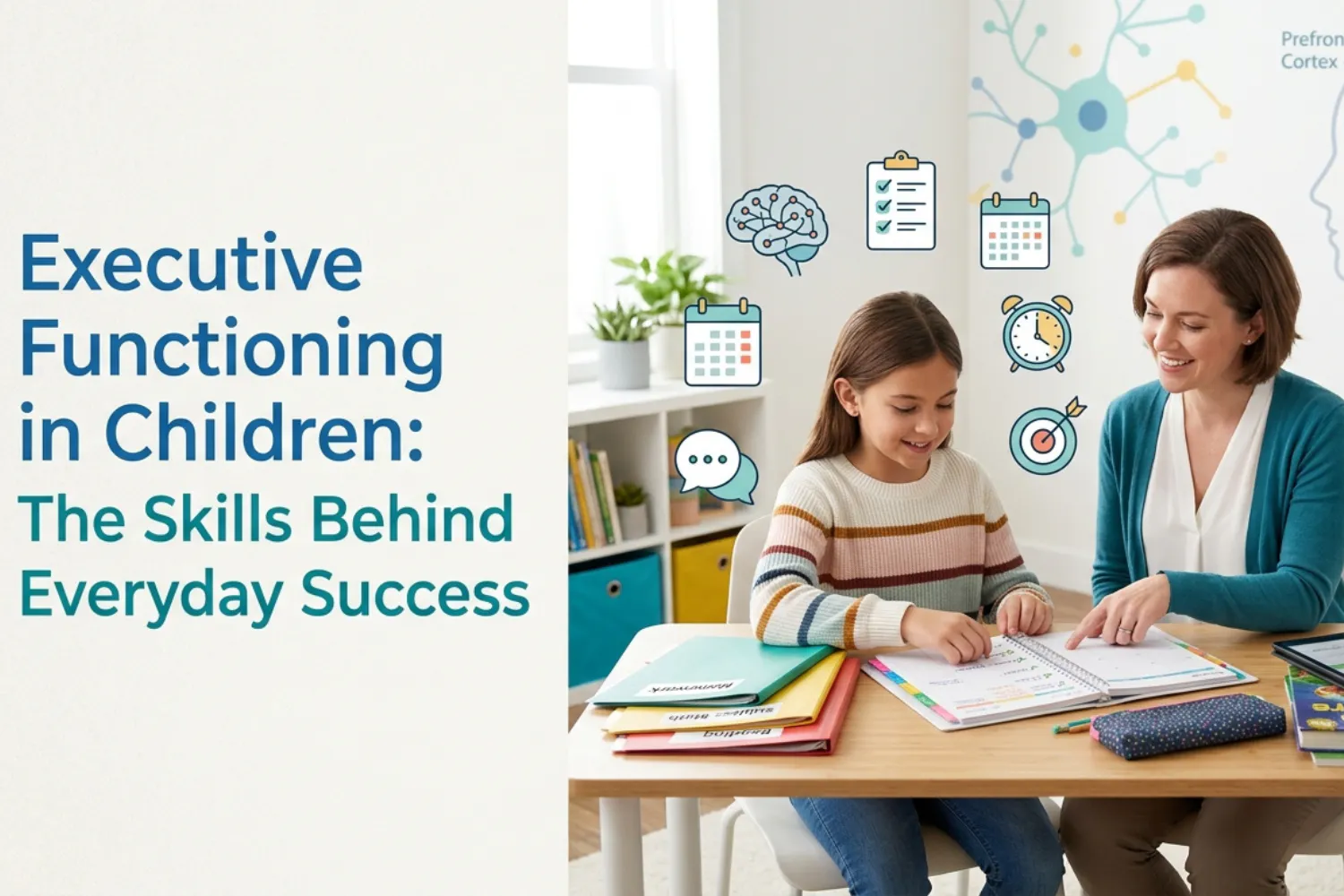
Parents often wonder why one child seems to manage school assignments, routines, and emotions with relative ease while another struggles to remember instructions, stay organized, or cope with everyday frustrations. These challenges are not always a reflection of intelligence, motivation, or effort. In many cases, they are linked to a set of mental processes known as executive functioning.
Executive functioning plays a crucial role in how children learn, solve problems, manage emotions, and navigate daily life. These skills influence everything from completing homework and following directions to making friends and handling disappointment. When executive functioning skills are underdeveloped, children may experience difficulties that affect academic performance, social relationships, and self-confidence.
Understanding executive functioning can help parents recognize that many behaviors often labeled as laziness, forgetfulness, or defiance may actually reflect developmental challenges that require support and guidance.
What Is Executive Functioning?
Executive functioning refers to a group of cognitive processes that enable individuals to plan, organize, focus attention, regulate emotions, remember information, and control impulses. These skills act as the brain’s management system, helping people coordinate thoughts and actions to achieve goals.
Executive functions allow children to think before acting, switch between tasks, manage time effectively, and adapt to changing situations. They help children organize materials for school, remember instructions, solve problems, and persist when tasks become difficult.
Researchers often compare executive functioning to an air traffic control system. Just as air traffic controllers manage multiple planes arriving and departing simultaneously, executive functions help the brain coordinate multiple demands and responsibilities. Without these skills, even simple daily tasks can become overwhelming.
Executive functioning develops gradually throughout childhood, adolescence, and early adulthood. In fact, the areas of the brain responsible for executive functioning, particularly the prefrontal cortex, continue maturing well into a person’s twenties.
Why Executive Functioning Matters
Executive functioning influences nearly every aspect of a child’s life. These skills are essential not only for academic success but also for independence, social relationships, and emotional well-being.
Children rely on executive functioning when they:
- Follow multi-step directions.
- Complete homework assignments.
- Organize their backpacks and school supplies.
- Manage transitions between activities.
- Solve problems independently.
- Control impulses.
- Wait their turn.
- Adapt to unexpected changes.
- Cope with frustration and disappointment.
- Set goals and work toward them.
Strong executive functioning skills contribute to resilience, confidence, and the ability to navigate challenges successfully. Conversely, difficulties in these areas can lead to frustration, anxiety, behavioral concerns, and struggles in school and social settings.
Organization and Planning
One of the most visible aspects of executive functioning involves organization and planning. These skills enable children to manage time, prioritize tasks, and prepare for upcoming responsibilities.
Children with strong organizational skills are generally able to:
- Keep track of school assignments.
- Maintain orderly workspaces.
- Break large tasks into smaller steps.
- Anticipate what materials they need.
- Follow schedules and routines.
Children who struggle with executive functioning often have difficulty with these tasks. Their backpacks may be disorganized, homework may frequently be forgotten, and simple routines may require constant reminders.
Planning involves looking ahead and understanding the sequence of events necessary to accomplish a goal. For example, preparing for a school project requires gathering materials, allocating time, completing assignments, and remembering deadlines. Children with executive functioning difficulties may understand what needs to be done but struggle to organize the process.
These challenges are common among children with attention-deficit/hyperactivity disorder (ADHD), learning disabilities, autism spectrum disorder, and other developmental conditions, but they can also occur in children without formal diagnoses.
Emotional Regulation
Emotional regulation is another critical component of executive functioning. It refers to the ability to manage feelings appropriately, tolerate frustration, and recover from disappointments.
Young children naturally experience strong emotions, but executive functioning helps them learn how to respond to those emotions constructively. Emotional regulation allows children to:
- Remain calm during stressful situations.
- Cope with changes in routine.
- Handle disappointment.
- Manage anxiety.
- Delay gratification.
- Express feelings appropriately.
When emotional regulation is challenging, children may appear impulsive, easily overwhelmed, or prone to emotional outbursts. They may have difficulty transitioning between activities or recovering after something unexpected occurs.
These reactions are not necessarily signs of poor behavior or intentional defiance. Instead, they often reflect a child’s limited capacity to manage emotions effectively. Understanding this distinction allows parents and caregivers to respond with empathy and support rather than punishment alone.
Developing emotional regulation is a gradual process that requires practice, consistency, and co-regulation from trusted adults.
Working Memory: The Brain’s Mental Sticky Note
Working memory refers to the ability to hold and manipulate information in the mind for short periods. It is often described as the brain’s temporary workspace.
Working memory enables children to:
- Follow multi-step instructions.
- Remember what they are reading.
- Solve mathematical problems.
- Participate in conversations.
- Complete tasks without forgetting the next step.
- Apply previously learned information to new situations.
For example, a child asked to “put away your shoes, wash your hands, and come to the table” must use working memory to remember and execute each instruction in sequence.
Children with weak working memory may frequently forget directions, lose track of tasks, or require repeated reminders. Teachers may observe that they seem inattentive or distracted when, in reality, they are struggling to hold information long enough to use it effectively.
Working memory difficulties are particularly common in children with ADHD and specific learning disorders, but they can affect children with a variety of developmental profiles.
Signs of Executive Functioning Difficulties
Executive functioning challenges can manifest in many ways and may look different depending on a child’s age and developmental level.
Common signs include:
- Difficulty starting tasks independently.
- Frequent forgetfulness.
- Losing belongings regularly.
- Trouble following multi-step directions.
- Poor time management.
- Disorganization.
- Difficulty transitioning between activities.
- Emotional outbursts that seem disproportionate to the situation.
- Problems with impulse control.
- Trouble waiting their turn.
- Difficulty completing assignments.
- Becoming overwhelmed by routines or responsibilities.
- Avoiding tasks that require planning or sustained effort.
Children with executive functioning difficulties often know what they should do but struggle with how to do it. This discrepancy can lead to frustration and negative self-perceptions, particularly when adults interpret these challenges as laziness or lack of motivation.
Executive Functioning and ADHD
Executive functioning difficulties are particularly common in children with ADHD. Research indicates that impairments in executive functioning are among the core features of ADHD and may explain many of the academic and behavioral challenges associated with the condition.
Children with ADHD often experience difficulties with:
- Sustaining attention.
- Inhibiting impulses.
- Organizing tasks.
- Managing time.
- Regulating emotions.
- Remembering instructions.
According to the Centers for Disease Control and Prevention, approximately 11 percent of children in the United States have received a diagnosis of ADHD. However, executive functioning challenges are not limited to ADHD and can occur in children with autism spectrum disorder, anxiety disorders, learning disabilities, traumatic brain injuries, and other developmental conditions.
Ways Parents Can Help
Executive functioning skills can be strengthened over time, and parents play an important role in supporting their development. Rather than expecting children to manage responsibilities independently before they are ready, caregivers can provide structure and guidance that gradually promote independence.
Establish Predictable Routines
Consistent routines reduce cognitive demands and help children know what to expect. Morning schedules, bedtime routines, and visual reminders can make daily activities more manageable.
Break Tasks Into Smaller Steps
Large assignments or chores can feel overwhelming. Dividing tasks into smaller, achievable steps makes them easier to complete and builds confidence.
Use Visual Supports
Calendars, checklists, picture schedules, and timers help externalize information that children may struggle to hold in working memory.
Teach Emotional Regulation Skills
Helping children identify emotions, practice deep breathing, and use calming strategies can strengthen self-regulation. Adults also play a key role in co-regulation by remaining calm and providing support during difficult moments.
Encourage Problem Solving
Instead of immediately solving problems for children, parents can guide them through the process by asking questions and brainstorming solutions together.
Provide Positive Reinforcement
Recognizing effort and progress helps children build confidence and motivation. Celebrating small successes encourages persistence and resilience.
Model Organizational Skills
Children learn by observing adults. Demonstrating how to create lists, organize materials, and manage time provides valuable examples they can imitate.
When to Seek Professional Support
While all children occasionally forget instructions or struggle with organization, persistent difficulties that interfere with daily functioning may warrant professional evaluation.
Parents should consider seeking support if executive functioning challenges significantly affect:
- Academic performance.
- Social relationships.
- Emotional well-being.
- Daily routines.
- Independence and self-care.
Early identification can help children receive the support they need before frustration and low self-esteem become more deeply entrenched.
Professionals such as pediatricians, psychologists, occupational therapists, speech-language pathologists, and developmental specialists can assess executive functioning and recommend interventions tailored to a child’s needs.
How Twinkle Little Star Foundation Supports Families
At Twinkle Little Star Foundation, we recognize that executive functioning challenges affect not only children but entire families. Difficulties with organization, emotional regulation, and working memory can create stress and uncertainty for caregivers who may not know where to turn for guidance.
Through parent education, community programs, family support initiatives, and connections to developmental resources, we strive to empower families with practical strategies and evidence-based information. Our goal is to ensure that parents feel supported and that children receive opportunities to develop the skills they need to thrive.
Conclusion
Executive functioning is the brain’s management system, influencing how children plan, organize, regulate emotions, remember information, and solve problems. These skills affect nearly every aspect of daily life and play a critical role in academic success, social relationships, and independence.
Children who struggle with executive functioning are not lazy, careless, or lacking intelligence. They may simply need additional support and opportunities to develop these essential skills. With understanding, structure, and early intervention, children can build stronger executive functioning abilities and gain the confidence needed to navigate life’s challenges successfully.
At Twinkle Little Star Foundation, we believe that every child deserves the opportunity to develop the skills necessary to reach their fullest potential and that every family deserves the resources and support needed to help make that possible.
Donate today and help every child take the next step toward a brighter future.